There was a lot of things that struck me about the internships, most people worked on computers, some people didn't like their interships and others did, some people had good experiences, and other's had some that were not so good.
Some of the things that I am going to look for in an internship is something that I like to do, that is related to my future career, something that will give me knowledge that I can use later in life, and something that will push me forward in the career I will pursue.
One that I thought painted a good picture was the one about the student who identified herself with a little girl from her internship. I think that the reason why it was so discriptive was because she gave the little girl an independant air around her. I also thought the part where she mentioned that she stalked the girl and her mom a little was funny.
Wednesday, February 23, 2011

Thursday, February 17, 2011
Suheir Hammad & Marjane Satrapi on War Part 2
I think that the way that Suheir's poems and Persepolis define revolutions is that people were meant to be free, not constantly watched, monitored, and having everything they hear and see censored, like in Iran where everything was censored to the Ayatolla's agenda, which is to keep everyone under control. That the people with "the loot and the nukes" can be overthrown and made to show their true colors. The line from Suheir's poem that says this the most is, "Who worked toward social justice, and opposing hateful policies, Either you are with us or with the terrorists, meaning keep your people under control and resistance censored, meaning we got the loot and the nukes."
Another way that Persepolis defines revolutions is that Marjane was always rebeling, as a young teenager to a twenty year old woman. She was always wearing things she wasn't supposed to wear, she was always partying(which was not allowed in Iran, at least the way that Marjane was partying.) She also wasn't a virgin and she wasn't and never had been married(though she did have a boyfriend), which was frowned upon in Iran.
Another way that Persepolis defines revolutions is that Marjane was always rebeling, as a young teenager to a twenty year old woman. She was always wearing things she wasn't supposed to wear, she was always partying(which was not allowed in Iran, at least the way that Marjane was partying.) She also wasn't a virgin and she wasn't and never had been married(though she did have a boyfriend), which was frowned upon in Iran.
Wednesday, February 16, 2011
Suheir Hammad & Marjane Satrapi on War
One of the lines that struck me from Suheir's poems are, "I will not dance to your war drum, I will not lend my soul nor my bones to your war drum, I will not dance to that beating," because she refuses to join in and support wars. Another quote that struck me was, "I will not hate for you or even hate you. I will not kill for you, especially I will not die for you,I will not mourn the dead with murder or suicide," which again, to me, says that she will not support or join wars. Another line from her peoms that struck me was, "Girl spoiled before ripened, language can't math me, I experience exponentially, everything is everything. One woman loses 15 maybe twenty member's of her family, one loses 6, one woman loses her head, One woman searches rubble, one woman feeds on trash." because it reminds me about what happened to Marji and how countries that are at war become impoverished and filled with sadness and death.
The connections between Marjane's ideas and Suheir's ideas on war are that war is painful, pointless, and is not as powerful as peace. Also that too many young people die in wars and that everyone is left broken by war, physicaly and emotionaly. That families are torn apart by wars and death. That refugees (like Marji) don't have many places to go.
Something that struck me about Persepolis is that it gave the point of veiw of someone who knew how life was before and after the revolution, it gave a good comparison of both times. And also that Marjane was very discriptive about how life was in Iran at that time.
The connections between Marjane's ideas and Suheir's ideas on war are that war is painful, pointless, and is not as powerful as peace. Also that too many young people die in wars and that everyone is left broken by war, physicaly and emotionaly. That families are torn apart by wars and death. That refugees (like Marji) don't have many places to go.
Something that struck me about Persepolis is that it gave the point of veiw of someone who knew how life was before and after the revolution, it gave a good comparison of both times. And also that Marjane was very discriptive about how life was in Iran at that time.
Thursday, February 10, 2011
Islam: Customs
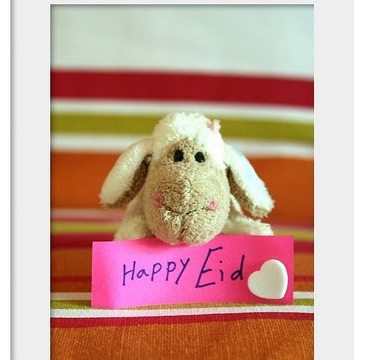 There are two main Muslim holidays that are celebrated by all Muslims. The first is Eid Al Fitr, this holiday marks the end of Ramadan and is held on the day after Ramadan is over. In this holiday people exchange gifts, have a big feast, have a community prayer. After the morning prayer, people greet eachother with 1-3 hugs, depending on their culture. Another holiday is Eid Ul Adha. In this holiday people honor the sacrifice Abraham (a prophet) made by almost sacrificing his son Ishmael and Muslims believe that God sent a lamb to take Ishmael's place as a reward for Abraham being so obedient. On this holiday Muslims slaughter lambs and give out the meat to the poor and their family. They also have a community prayer on this day.
Subscribe to:
Comments (Atom)